

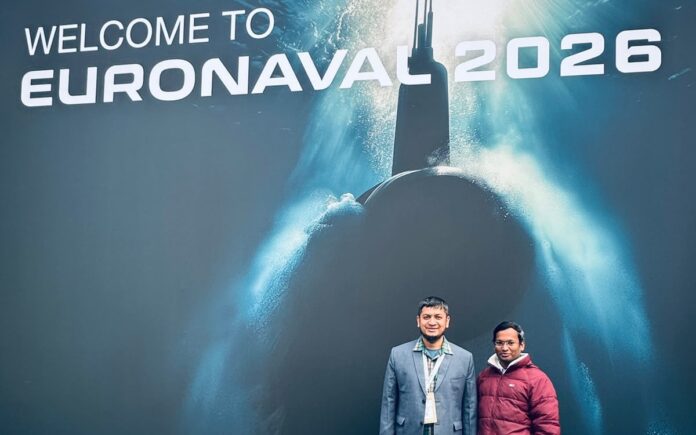
Paris, 6 November 2026: EURONAVAL 2026, the international naval defence exhibition held in Paris from 3 to 6 November, put the spotlight on the technologies set to shape future navies: artificial intelligence, autonomous vessels, advanced combat management systems, new warship designs, modern naval weapons, electronic warfare, smart surveillance and digital shipbuilding.
Major manufacturers including Naval Group, Thales, MBDA, BAE Systems, Saab, Leonardo, Exail, Indra and KNDS presented their latest systems. For Bangladesh, the show pointed to clear opportunities to modernise the Navy and Coast Guard and to strengthen local shipbuilding through international partnerships and technology transfer.
AI-integrated combat management
One of the main trends was the use of artificial intelligence in combat management systems. Companies such as Thales, Saab and Leonardo showed solutions that bring radar, sonar, electronic warfare, electro-optical sensors and weapon control into a single platform, allowing faster threat detection, better situational awareness and quicker decisions.
Such systems could be considered for Bangladesh’s future frigates, corvettes and offshore patrol vessels (OPVs), depending on operational needs and technical compatibility.
Autonomous surface and underwater vessels
Unmanned surface vessels (USVs) and autonomous underwater vehicles (AUVs) were among the most visible areas of innovation. Exail and other manufacturers presented platforms for maritime surveillance, hydrographic surveys, underwater inspection, mine countermeasures and intelligence gathering.
For Bangladesh, these could help monitor the Exclusive Economic Zone (EEZ), protect offshore installations, secure seaports and watch the coast. Pairing small autonomous craft with conventional patrol ships could greatly extend the reach of the Navy and Coast Guard.
Naval guns and counter-drone defence
Modern naval guns and counter-drone systems drew strong interest. BAE Systems highlighted its modular 40 mm naval gun, while others showed remote weapon stations, electro-optical fire control and integrated counter-drone solutions designed against small drones, fast attack boats and other asymmetric threats.
Advanced 30 mm and 40 mm guns with suitable sensors and fire control could fit Bangladesh’s future coastal patrol vessels (CPVs), inshore patrol vessels (IPVs), light patrol craft (LPCs) and OPVs.
Next-generation warships and modular design
Naval Group presented its SCX-26 next-generation warship concept, showcasing modular design, integration of autonomous systems and advanced propulsion. Modular ships can take different mission equipment, sensors and combat systems over their lifetime.
Applying modular principles to future patrol vessels, corvettes and OPVs could make upgrades easier for Bangladesh, and could help local shipyards work with international naval architects, equipment makers and system integrators.
Radar, sonar and electronic warfare
Indra highlighted its Prisma-S multifunction AESA radar, while Thales and Saab continue to develop integrated surveillance and combat systems. Advanced sonar, electronic support and countermeasures, and multifunction radar improve detection and tracking above, on and below the sea, which is highly relevant to security needs in the Bay of Bengal, including protection of offshore infrastructure and key shipping routes.
Missiles and integrated defence
MBDA presented technologies linked to naval strike and defence, including the Exocet family, naval air defence and integrated counter-threat solutions. As modern naval defence depends on sensors, command systems, electronic warfare and weapons working together, Bangladesh’s planners could benefit from evaluating integrated defence architectures rather than buying individual weapons in isolation.
Hybrid propulsion, digital twins and smart shipbuilding
Beyond combat systems, the exhibition featured hybrid propulsion, integrated power management, digital engineering, virtual ship models and predictive maintenance. Digital twin technology lets designers, builders and operators simulate a ship’s performance, track equipment condition and plan maintenance across its life. For Bangladesh’s shipyards, such tools could improve engineering efficiency, build quality, reliability and international competitiveness, in both naval and commercial work.
Technologies most relevant to Bangladesh
| Technology | Possible use in Bangladesh |
|---|---|
| AI-integrated combat management systems | Navy frigates, corvettes and OPVs |
| Advanced 30/40 mm naval guns | Coast Guard CPVs and IPVs, Navy LPCs |
| Counter-drone defence | Naval vessels, ports and critical maritime infrastructure |
| Unmanned surface vessels | Coastal and EEZ surveillance |
| Autonomous underwater vehicles | Hydrographic surveys, underwater inspection, mine countermeasures |
| AESA radar and electronic warfare | Maritime surveillance and naval defence |
| Modular warship design | Future CPVs, LPCs, OPVs and corvettes |
| Hybrid propulsion | Patrol vessels and auxiliary naval ships |
| Digital twins and smart shipbuilding | Local shipyards and marine engineering firms |
Opportunities for local shipyards
Bangladesh’s state-owned and private shipyards have already built considerable expertise, and several have delivered vessels under major classification societies such as Bureau Veritas (BV), Lloyd’s Register (LR), DNV and the American Bureau of Shipping (ABS).
Combining that experience with advanced European and international designs, equipment and combat systems could let Bangladesh build more sophisticated naval and coast guard vessels at home. Cooperation could cover technology transfer, joint design, local integration of equipment, specialist training, production engineering and long-term maintenance support. Success, however, will depend on careful attention to platform compatibility, cybersecurity, lifecycle costs, export controls, training and regulatory approvals.
A Bangladeshi naval architect’s view
Bangladeshi naval architect and maritime consultant Md. Shamsul Alam, who visited EURONAVAL 2026, said Bangladesh should focus not only on acquiring modern naval technology but also on building the domestic engineering, integration and maintenance skills needed to sustain it. He stressed the value of technical partnerships between international defence manufacturers, naval design firms and qualified Bangladeshi shipyards.
“The important question is not simply what advanced naval technologies are available today, but how Bangladesh can integrate these technologies into its own naval platforms and gradually develop the capability to design, build, integrate and maintain technologically advanced vessels domestically.”
He also urged that future technology integration be planned into the initial design of naval and coast guard vessels, rather than treated as a separate upgrade after construction.
A strategic opportunity
EURONAVAL 2026 showed that future naval operations will rely more and more on AI, autonomous platforms, advanced sensors, integrated combat systems and flexible ship designs. A coordinated effort involving the Bangladesh Navy, the Coast Guard, government agencies, international technology providers, naval architects and public and private shipyards could speed up the adoption of these technologies.
With the right planning, international collaboration and investment in local expertise, Bangladesh could move from being a buyer of naval technology to becoming a capable regional centre for building advanced naval vessels and integrating their systems.
Maritime News BD special coverage from EURONAVAL 2026, Paris.
Photo: At EURONAVAL 2026 in Paris. Maritime News BD