





A US congressional advisory body has described China’s stepped-up safety inspections of Panama-flagged ships earlier this year as “economic coercion”, and has urged Congress to give Washington tools to respond, according to Maritime Executive.


The US-China Economic and Security Review Commission set out the findings in its annual report to Congress, delivered on 18 November.
What the report says
- Inspections of Panama-flagged ships at Chinese ports rose from about 21 a month to 140 in May 2026, based on Tokyo MOU data. The Commission estimates about 500 ships were inspected in total.
- The campaign ended quietly in July after talks between Panama and China.
- The Commission called the inspections a “systematic use” of safety checks as punishment, linked to the dispute over CK Hutchison’s concession for the Balboa and Cristobal terminals, which Panama’s Supreme Court annulled.
- It says more than 80 ships left the Panama registry in April and 150 more in May.
China’s position
China has said the inspections followed safety incidents involving Panama-flagged ships, including collisions with fishing vessels, and has denied that they were retaliation over the ports dispute.
What the Commission recommends
- Direct the US Federal Maritime Commission to fully investigate Chinese actions and report within 90 days.
- Authorise economic measures, including existing sanctions, and give the president authority to respond to Chinese economic coercion.
- Require an annual US intelligence report on Chinese activity in the Western Hemisphere.
Panama runs the world’s largest ship registry, so pressure on its flag affects shipowners and crews well beyond the Americas. The recommendations are advisory; Congress decides whether to act on them. Earlier this week, Panama also filed a criminal complaint tied to the CK Hutchison port contract.
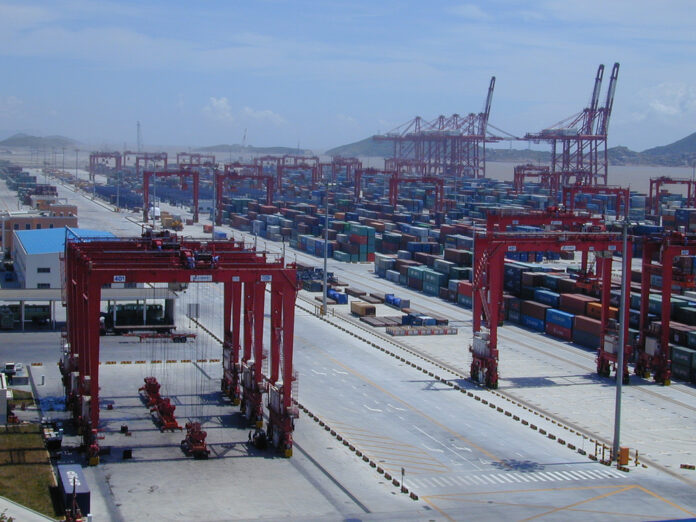
Sources: Maritime Executive, November 2026 (on the US-China Economic and Security Review Commission’s 2026 report to Congress, 18 November); US Federal Maritime Commission, earlier statement on China’s detention of Panama-flagged vessels. Photo: Yangshan port, Shanghai (file, illustrative); Wikimedia Commons, public domain.