
Maersk and Hapag-Lloyd will move three more of their Gemini Cooperation services between Asia and Europe back to the Red Sea and Suez Canal, instead of sailing around Africa’s Cape of Good Hope, Maersk said in a customer advisory on 16 November.
The changes
- AE2 (Asia, Europe and the Middle East): first trans-Suez sailing with Mary Maersk from Ningbo on 4 December 2026.
- AE3 (Asia and Europe): first sailing with Alette Maersk from Shanghai on 20 December 2026.
- AE1 (Asia and Europe): first sailing with Damietta Express from Shanghai on 14 January 2027.
- All three rotations call at Tanjung Pelepas in Malaysia before the Suez Canal, and at Singapore on the way back to China.
Maersk called the Suez Canal and Red Sea route “the fastest, most sustainable, and most efficient way” to connect Asia, Europe and the Middle East, and said the move will give customers more efficient transit times.
Part of a gradual return
The announcement follows earlier switches. In September the partners moved four more Gemini services (AE5, AE11, AE12 and ME2) back to the canal, and earlier this month they announced the return of the ME1 service connecting India and Europe, gCaptain reported.
Both carriers said any further changes will depend on continued stability in the Red Sea, and that the safety of crew, vessels and cargo remains the top priority.
Congestion may linger
In a market assessment published on 16 November, DHL Global Forwarding said the Suez return should free up vessel capacity absorbed by long diversions around Africa, but that more than 10% of the global container fleet, about 3.6 million TEU, remains tied up in port congestion. DHL said around 60% of relevant Asia-Europe headhaul services are now planned to run through Suez, and that pressure on supply chains could continue well into 2027.
Why it matters for Bangladesh
Most of Bangladesh’s exports to Europe, led by garments, are carried on mainline Asia-Europe services after transshipment at hubs such as Singapore, Tanjung Pelepas and Colombo. Shorter routings on the main east-west services can cut voyage times, although the effect on individual shipments depends on each carrier’s network and connections.
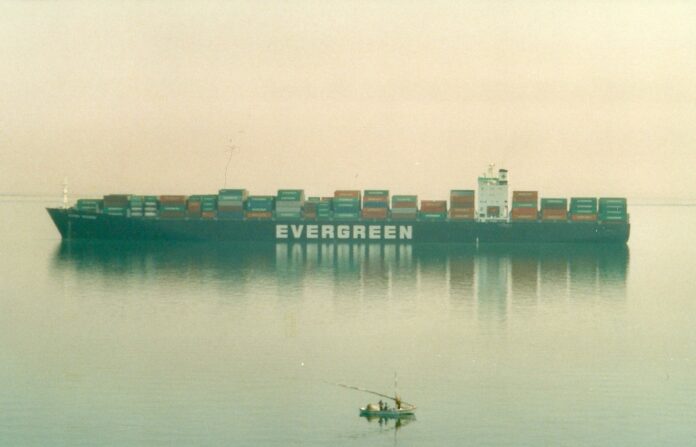
Sources: Maersk customer advisory (16 November 2026); gCaptain (16 November 2026); DHL Global Forwarding market assessment, as reported by gCaptain. Photo: file photo of a container ship in the Suez Canal, Aah-Yeah / Wikimedia Commons, CC BY 2.0.