

Ship arrivals at Mongla, Bangladesh’s second-largest seaport, have fallen by about 42% in four years, according to Mongla Port Authority traffic data reported by the Bangla daily Bonik Barta on 12 November.
The port handled 1,712 ship arrivals in FY2021-22. In FY2025-26 the figure was 987, the lowest since FY2016-17 and 725 fewer than four years earlier. Departures fell from 1,708 to 994 over the same period.
Year by year
- FY2021-22: 1,712 arrivals
- FY2022-23: 1,223
- FY2023-24: 1,089
- FY2024-25: 1,052
- FY2025-26: 987
In the first quarter of FY2026-27 (July–September), 213 ships arrived and 200 departed, an average of about 71 arrivals a month against 82 last fiscal year. The steepest fall was in the “India-Bangladesh Protocol and others” category, down from 826 ships in FY2021-22 to 172 in FY2025-26.
Pussur navigability blamed
Port users cite the navigability crisis in the Pussur River. Large ships must unload much of their cargo at the outer anchorage before entering, which raises costs and disrupts schedules; some container traders have moved to Chattogram. According to the port’s website, berths and mooring buoys take ships of 6 to 9.5 metres draft, the channel allows 9.5 metres year-round and 10.5 metres at monsoon spring tides, and maximum vessel length is 225 metres.
“Large ships cannot be brought directly to the jetty,” Capt. Md. Rafiqul Islam, chairman of the Bangladesh Shipping Agents Association, Khulna, told Bonik Barta. He said imports were already falling before navigability problems made it worse, and called for long-term, planned river port management.
Zulfikar Ali, general secretary of the Mongla Port Berth Ship Operators Association, pointed to three causes: navigability, fewer container ships and fewer gas carriers. He said customs procedures that should take a day can take up to 11 days, and called for modernisation and digitalisation.
Port authority: cargo at record
In a written statement, the port authority’s public relations office said that although ship arrivals have fallen, cargo handling has grown and is at a record level since FY2015-16. It said ship movements depend on trade, politics, the Middle East conflict and the port’s importance.
Mongla is mainly an import port, handling clinker, gypsum, limestone, fertiliser, wheat, LPG, molasses and vehicles. Exports are limited.
Related: Mongla posts record cargo and revenue, but Pasur dredging debt weighs on the port
Source: Bonik Barta (12 November 2026), citing Mongla Port Authority traffic department data and the port’s website.
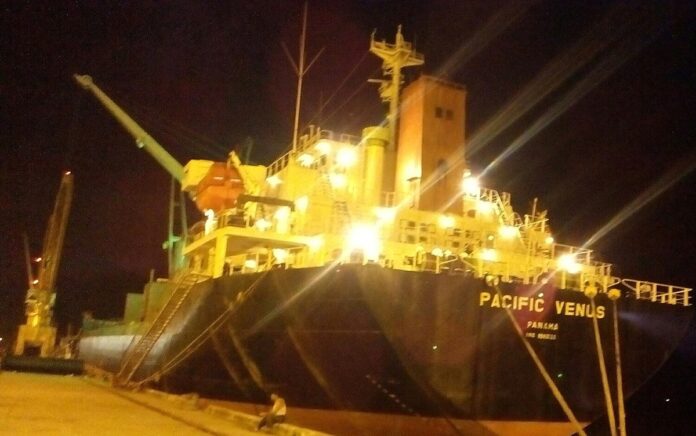
Photo: File photo of a ship at Mongla Port. Abdullah Al Noman / Wikimedia Commons, CC BY-SA 4.0.