

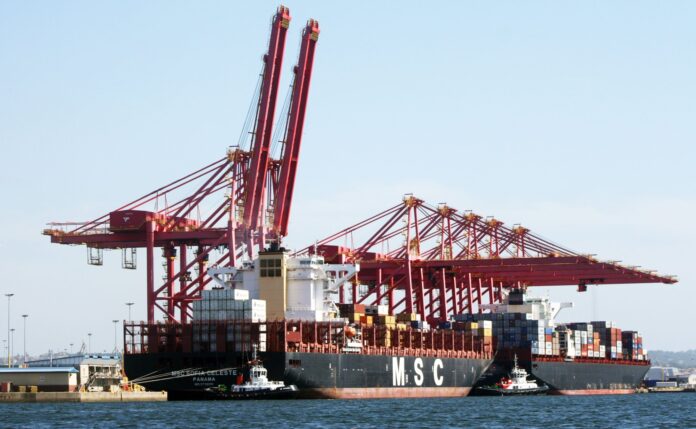
Severe delays at Durban, South Africa’s busiest container port, are hurting the country’s automotive industry, with cargo backlogs approaching 20 days, Bloomberg reported on 14 November.
What is happening
- The trouble centres on Durban Gateway Terminal (DGT, Pier 2), the country’s largest container terminal. Manila-based International Container Terminal Services Inc. (ICTSI) became Transnet’s private operating partner there this year, and a new terminal operating system was introduced after the handover.
- Vessel waiting times have roughly doubled, Transport Minister Barbara Creecy said in October.
- Peter Besnard of the South African Association of Ship Operators and Agents told Daily Maverick that 42 vessels were at anchorage on the day he spoke. Another industry source estimated that a ship arriving at anchorage waits about 12 days before work starts.
- The South African Association of Freight Forwarders said current conditions add “around 20 days to affected supply chains.”
Carmakers hit
Auto parts maker Metair Investments, which supplies Volkswagen, Ford and Toyota, said port backlogs were approaching 20 days. Nearly half of its market value was wiped out on Friday, Bloomberg reported.
“The impact of port congestion and delays is widespread across the automotive manufacturing value chain,” said Renai Moothilal, chief executive of the National Association of Automotive Component and Allied Manufacturers (Naacam). South Africa’s auto industry, which rivals mining in its contribution to economic output, is already facing cheap Asian imports and US tariffs.
Operator’s response
DGT chief executive Javier Lancha said the new system has stabilised and that the terminal is keeping customers informed. DGT said it takes Metair’s concerns seriously and planned to meet Naacam members on Monday. Industry figures told Daily Maverick that the terminal has “stabilised, but not recovered,” with new equipment expected around the middle of next year.
Why it matters
Durban handles around half of South Africa’s containerised freight. Long port delays raise shipping costs and disrupt schedules for carriers serving the region, a reminder of how terminal operations affect trade, as Bangladesh’s own ports bring in new operators.
Sources: Bloomberg (14 November 2026), published by gCaptain; Daily Maverick (11 November 2026).