

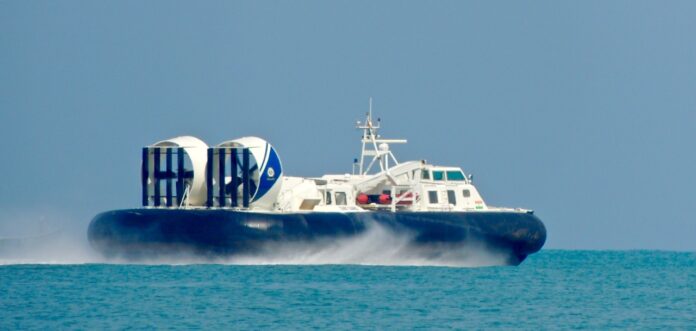
The Indian Coast Guard’s first indigenously built air cushion vehicle (ACV), the hovercraft H-561, is to be based at Haldia in West Bengal, on the Bay of Bengal coast west of the Sundarbans. Indian defence social media pages this week shared photos of the craft at Haldia.
H-561 was built by Chowgule and Company at its shipyard in Goa under a technology licence from UK-based Griffon Marine, and was handed over to the Coast Guard on 18 June 2026, The Week reported at the time. It is the first hovercraft of its kind built by a private Indian shipyard.
Six craft, Rs 387 crore
- Contract: Chowgule is building six hovercraft for the Coast Guard under a deal worth Rs 387.4 crore, with the remaining five due at roughly three-month intervals. The yard will also maintain the craft for five years after delivery.
- Size: 22.52 metres long and 11 metres wide, according to Baird Maritime.
- Power and speed: two turbocharged diesel engines driving two ducted, variable-pitch propellers; maximum speed 45 knots and cruising speed 35 knots, with up to nine hours’ endurance.
- Capacity: an 8-tonne payload or up to 42 passengers, with a crew of 13.
- Local content: more than half of the components are of Indian origin, The Week reported.
Built for mudflats and shallows
Unlike boats, hovercraft ride on a cushion of air, so they can cross mudflats, sandbanks, shallow water and land. The Coast Guard uses them for maritime security, law enforcement, search and rescue, and flood and disaster relief in areas that conventional patrol boats cannot reach. Until now, its hovercraft fleet has been made up of Griffon 8000TD craft, including units built in India by Garden Reach Shipbuilders and Engineers in Kolkata.
For Bangladesh, the craft adds Indian patrol capacity in the shallow, silt-laden waters of the northern Bay of Bengal near the shared Sundarbans maritime area.
Sources: The Week (19 June 2026), Baird Maritime (7 October 2026). Photo: file image of an earlier Indian Coast Guard Griffon 8000TD hovercraft, not H-561.