

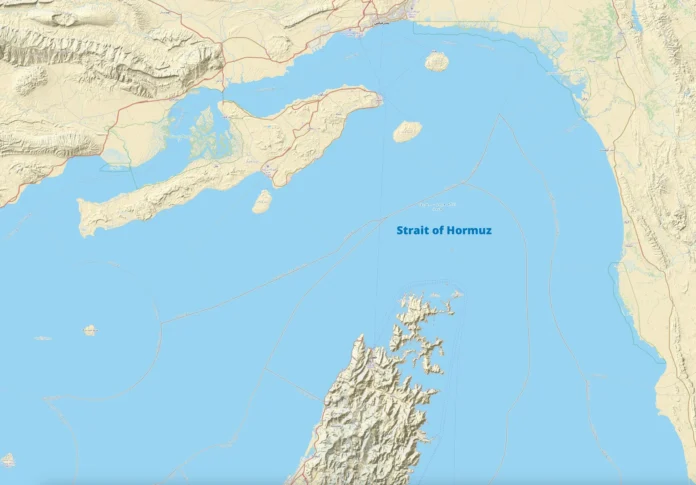
International. After US President Donald Trump announced a preliminary deal with Iran to end the war that had closed the Strait of Hormuz, ship-tracking data four days later showed only seven vessels had passed through, while more than 550 remained stranded on either side, Al Jazeera reported on 17 June 2026, citing MarineTraffic.
Iran closed the strait after US-Israeli strikes began on 28 February; before the war, 120 to 140 ships transited daily, about half of them tankers. The report said Iran had set up a Persian Gulf Strait Authority in May to oversee transit, which the US and six Gulf states opposed, and that the US says parts of the strait were mined, which Iran has not confirmed.
War-risk insurance premiums, about 0.25 per cent of hull value before the war and up to 5 per cent during it, had eased only to roughly 1-3 per cent according to analyst Haider Anjum, or 2.5-5 per cent according to NSI Insurance Group’s Oscar Seikaly. IMO Secretary-General Arsenio Dominguez welcomed the deal but said implementation would take time. The Bangladeshi bulk carrier Banglar Joyjatra was among the ships stranded in the strait until 23 June.
Source
- Al Jazeera: “Strait of Hormuz reopens: How will safe passage for ships be ensured?” (17 June 2026)
File photo: map of the Strait of Hormuz (OpenStreetMap). Photo: OpenStreetMap / CC BY 4.0, via Wikimedia Commons
This article is a summary prepared by Maritime News BD from the report(s) listed above; it was not independently reported by Maritime News BD.