

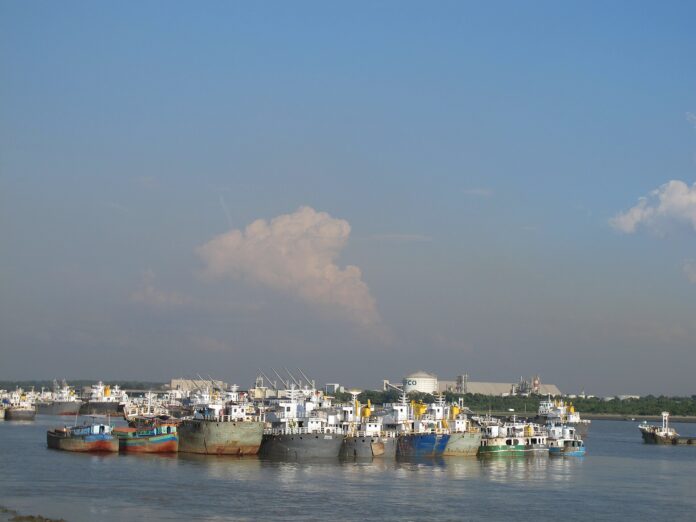
Bangladesh needs to treat river sediment as something to manage, not fight, if its port investments are to pay off, marine engineer and columnist Ifthekhar Alvi Nilay argues in a commentary published on 2 November.
The core argument
The same sediment that built the delta keeps silting up navigation channels, he writes. Rather than dredging in emergencies, the country should plan for it as a routine, predictable cost of running ports.
Port by port
- Chattogram: handles over 90% of international trade volume, with channel depths of roughly 7.5 to 9.5 metres. The World Bank-backed Bay Terminal, with $650 million approved in 2024 for marine works including a breakwater of about six kilometres, could save around $1 million a day, but only with long-term sediment, tide and climate modelling.
- Payra: persistent silting in the Rabnabad Channel shows why major projects should be costed over 30 to 50 years, including dredging and repairs.
- Matarbari: the deep-sea port will add value only if cargo can move inland efficiently by road, rail and waterway.
What he recommends
A national sediment budget, digital twins of major ports, nature-based solutions where they fit, more investment in maritime skills and research, and a National Port and Maritime Logistics Strategy to 2050 linked to the Bangladesh Delta Plan 2100. He points to Singapore and Rotterdam as examples of ports that succeed through whole-ecosystem planning, not size alone.
Summary of a commentary in The Business Standard. The views are the author’s.
Photo: Kritzolina / Wikimedia Commons, CC BY-SA 4.0