
In Depth: this feature brings together published reports and official statements, listed under Sources. Sections marked “Analysis” are Maritime News BD’s interpretation and are not reported facts.
The 2022 rush
When freight rates spiked in 2021-22, operators began bypassing transhipment hubs. In February 2022 Italy’s Kalypso Compagnia di Navigazione opened a Chattogram-Ravenna service with two 1,200-TEU ships; the trial voyage took 16 days against 40 to 45 days via hubs, at about $10,000 per 20-foot container when hub routings cost over $14,000, The Daily Star reported. In April 2022 UK forwarder Allseas Global Logistics chartered three ships of 1,500 to 1,800 TEU for a Chattogram-Rotterdam-Liverpool service, hoping for 23-day transits. MSC launched a Chattogram-China service and CMA CGM later a Gulf service.
The retreat
By October 2023, four of at least seven international routes launched since 2022 had stopped and the remaining three were at risk, India Seatrade News reported, citing port and operator interviews first reported by The Business Standard. Freight on several European routes had fallen about 80 per cent and export bookings more than 60 per cent. Reliance Shipping’s chairman Mohammed Rashed said per-container fares had dropped from $10,000-11,000 to about $2,000 and loads from 1,200 TEU per vessel to 400-450, adding that “it is not possible to operate the ship with such losses.” The Rotterdam-Liverpool service was suspended within four months, and CMA CGM’s Gulf service after five.
The structural limit
Chattogram’s practical vessel limit is about 2,700 TEU, The Business Standard reported in July 2026, which is why mainline carriers continue to tranship via Colombo, Singapore and other hubs. Shipping officials told The Daily Star as early as 2022 that big lines would consider direct calls only once larger terminals were operational. APM Terminals’ Laldia terminal, targeted for full operation in 2030, is designed for ships of up to 6,000 TEU, and Matarbari for larger vessels still.
Analysis
The 2022 services were a response to an extraordinary freight market rather than a change in the port’s fundamentals; small chartered ships became uneconomic as soon as hub rates fell. A durable direct service is more likely to come from mainline carriers deploying larger ships once deeper terminals open than from small charters. Until then, transit times to Europe will depend largely on hub congestion and on routes through Suez and the Red Sea.
Source
- The Daily Star: “Chattogram-Italy direct container shipping opens” (3 February 2022)
- The Daily Star: “New shipping service to connect Ctg with Liverpool, Rotterdam” (27 April 2022)
- India Seatrade News: “Seven liners started direct shipping, now only 3 remain” (14 October 2023)
- The Business Standard: “APM Terminals unveils $550m Laldia terminal layout; construction starts in December” (30 July 2026)
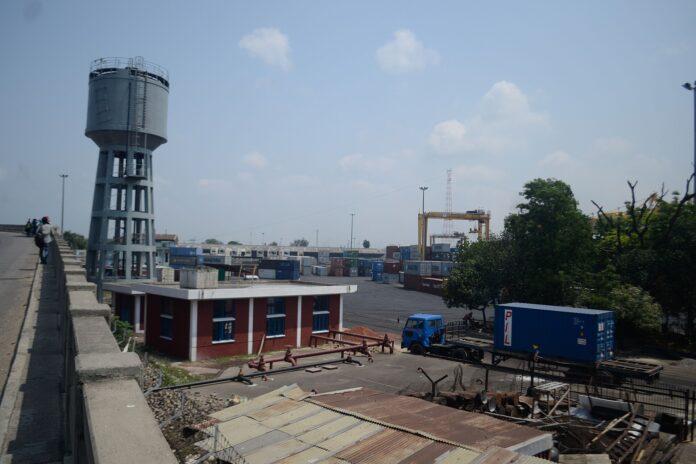
File photo: Chattogram port from the port connecting road. Photo: Roy Upam / CC BY-SA 4.0, via Wikimedia Commons
This article was prepared by Maritime News BD from the report(s) and documents listed above; it was not independently reported by Maritime News BD.