
Hydrogen sulphide that had built up in stagnant water and sediment in a ship’s ballast tank went undetected because ballast tanks fell outside the gas-free safety protocol, according to three probe reports into the 14 August gas leak at Ferdous Steel Ship Recycling Industries in Sitakunda, The Business Standard reported on 2 September 2026. Ten workers died.
The probes found that workers pierced the No 3 ballast tank of the MT RASI to drain water before cutting, and those near the discharge point inhaled the gas. The gas-free certificate issued by Intertek Kimsco did not test for hydrogen sulphide or carbon monoxide and marked all tanks acceptable without physically inspecting each one. Workers who pierced the tank and those who tried to rescue them had no gas masks or breathing apparatus, and no safety manager, ambulance or rescue team was present.
The reports also found that the yard’s environmental clearance had expired two days before the accident, that most of the main victims were not on the manpower list submitted to the Bangladesh Ship Recycling Board (BSRB), and that CCTV was not working. They recommended mandatory ballast-tank inspection certificates, sediment and water testing, and pre-arrival tank declarations from owners and cash buyers. BSRB Director General Shafiul Alam Talukder said the yard had been temporarily suspended; it paid Tk10 lakh to each victim’s family.
Source
- The Business Standard: “Hydrogen sulphide in ballast water went undetected, triggering shipbreaking yard tragedy: Probes” (2 September 2026)
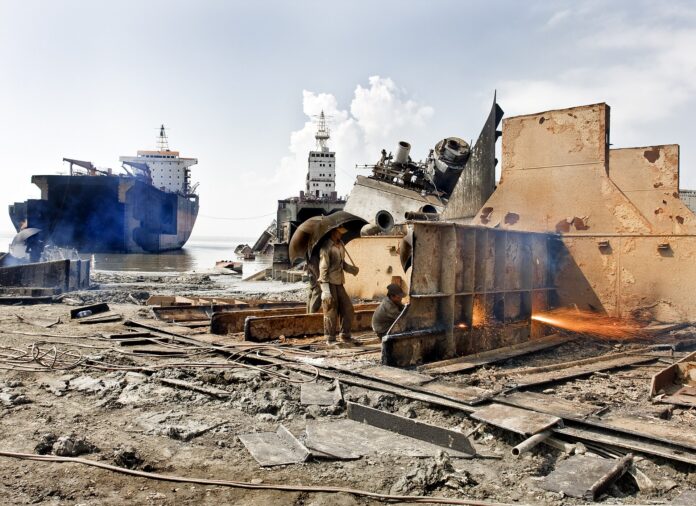
File photo: gas cutting at a ship-breaking yard in Bhatiari, Sitakunda. Photo: Naquib Hossain / CC BY-SA 2.0, via Wikimedia Commons
This article is a summary prepared by Maritime News BD from the report(s) listed above; it was not independently reported by Maritime News BD.